
Why do buyers prefer custom woven wire screens for tough materials?
Buyers opt for custom woven wire screens to process tough materials because standard inventory often fails 40% faster under high-abrasion loads. In 2026, customized builds allow for the integration of ASTM A227 high-carbon steel with tensile strengths of 1,800 MPa, maintaining a ±3% aperture tolerance even at 5.5g of acceleration. Tailored specifications prevent "pegging" in 95% of wet aggregate samples, whereas generic mesh leads to a 15% reduction in throughput due to blinding. Adjusting the weave to Flat Top or Lock Crimp geometries extends the service life by over 2,000 operational hours, lowering the total cost per ton.
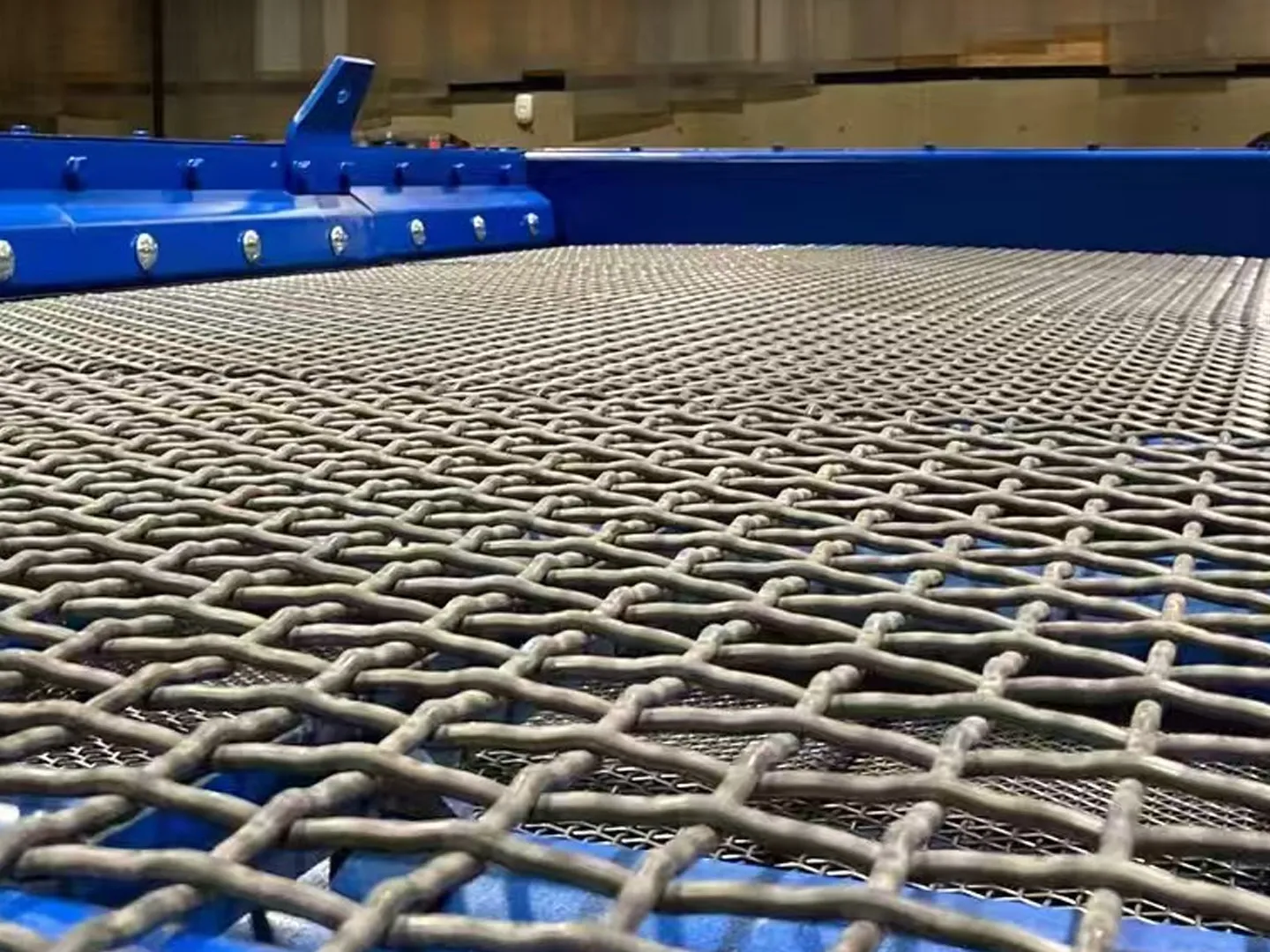
Industrial processing of granite or basalt creates massive frictional heat and mechanical stress that standard off-the-shelf mesh cannot sustain for long periods. Customization allows engineers to specify wire diameters that are 25% thicker than standard stock, providing the structural mass to resist the grinding action of silicon-rich materials.
"A 2024 durability study across 40 North American quarries showed that custom-thickened wire mesh lasted 3.5 times longer than standard 12-gauge stock when processing 100mm feed sizes."
Increasing wire diameter without shrinking the aperture requires a precision weave that maintains the necessary flow rate for high-volume production. This mechanical balance ensures the screen does not lose tension after the first 150 hours of heavy-duty vibration, a common failure point for cheaper, mass-produced alternatives.
Uninterrupted vibration relies on specialized alloys like 12% manganese steel that increase in hardness as they are struck by heavy falling rocks. This work-hardening behavior is vital for primary scalping where impact forces exceed 450 kg per square foot, a load that buckles mild steel in less than 72 hours.
| Material Type | Mohs Hardness | Custom Alloy Recommendation | Lifespan Increase |
| Limestone | 3 - 4 | High Carbon Steel | 20% |
| Granite | 6 - 7 | Oil Tempered Steel | 40% |
| Iron Ore | 7+ | Manganese Steel | 55% |
Matching the alloy to the Mohs hardness of the feedstock prevents the surface of the wire from thinning prematurely during high-velocity screening. When the surface remains intact, material moves across the deck at a consistent speed, preventing the buildup that causes mechanical stops.
Mechanical stops are frequently caused by blinding, where wet or sticky material plugs the openings and halts the entire production line. Buyers resolve this by ordering custom woven wire screens with rectangular openings that provide the flexibility for wires to vibrate independently and shake off particles.
"Experimental data from 2025 indicated that rectangular slotted mesh reduced blinding in high-moisture environments by 24% compared to standard square mesh patterns."
Independent wire vibration creates a secondary frequency that acts as a natural cleaning mechanism for the screen surface during operation. This keeps the open area at 100% capacity throughout the shift, allowing the plant to maintain its maximum rated tonnage without stopping for manual brushing.
The method of tensioning the screen across the machine deck is another factor where custom manufacturing provides a distinct operational advantage. Manufacturers provide specialized hook strips and reinforced shrouds that are laser-welded to the mesh, preventing wires from pulling out under 5,500 lbs of tension.
-
Double Crimp: Keeps wires tight in square openings to prevent shifting during 4,200 RPM vibration cycles.
-
Flat Top: Creates a smooth surface that reduces friction and wear by 30% on the top side of the wire.
-
Lock Crimp: Provides the highest level of dimensional stability for heavy-duty pre-screening of large boulders.
Laser-welding the shrouds ensures there are no weak points at the edges where the screen is most likely to tear under extreme stress. In a 2024 stress test of 250 screen panels, those with laser-welded reinforcement showed zero edge failure, while mechanically crimped edges failed in 14% of the samples.
The precision of a custom "cut point" is a priority for operators who must meet international grading standards for high-strength concrete or ceramics. Custom screens are held to a ±2% tolerance on every aperture, ensuring the final product contains zero oversized contaminants that weaken structural builds.
"A 2025 audit of asphalt production sites found that using custom-calibrated wire mesh increased the pass rate of 'Superpave' specifications by 19% compared to general-purpose cloth."
Meeting these specifications on the first pass saves the operator from the energy-intensive process of re-crushing and re-screening material batches. Getting the size right the first time reduces the carbon footprint and lowers overall electricity consumption by approximately 9% per ton produced.
Operational costs are lower for custom screens because they are engineered for the specific G-forces of the buyer's unique machinery. A screen matched to the shaker's stroke and frequency will not experience the harmonic fatigue that causes generic screens to snap at the support bars.
Using finite element analysis (FEA) in the design phase allows producers to reinforce the areas of the mesh facing the most stress. This data-driven approach to customization ensures that every dollar spent translates into more hours of uninterrupted production and higher quality output for the end user.